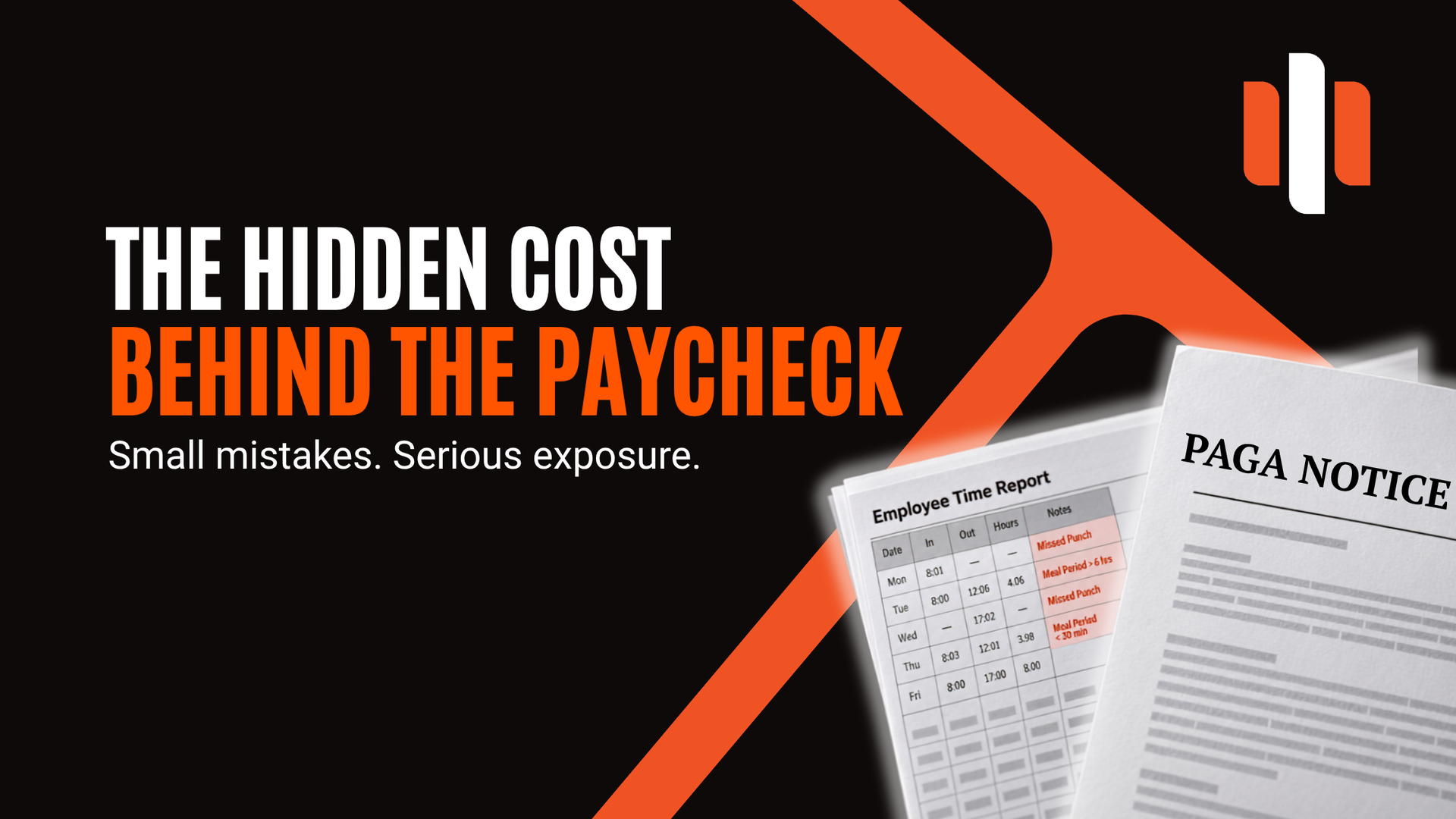
Most HR problems don’t begin with someone intentionally doing something wrong—and they don’t have to become lawsuits before they start costing the business.
A supervisor makes an offhand comment. An employee feels they’re being treated differently. A manager handles the same performance issue differently from one employee to another.
These moments may not seem serious at the time. But when they’re handled poorly—or not addressed at all—they can drain management time, disrupt productivity, damage morale, increase turnover, and eventually create legal exposure.
That’s one of the hidden costs of managing employees: you don’t always know a mistake is expensive when you’re making it.
Prefer to watch or listen? We’re also discussing this topic on The Martino Minute.
It Usually Starts Small
Employment complaints rarely begin with one dramatic event.
They may start with a poorly handled conversation, inconsistent discipline, or an employee concern that wasn’t taken seriously.
One employee gets written up for something another employee routinely gets away with. A supervisor handles the same situation differently depending on who’s involved. An employee raises a concern several times before anyone responds.
Even if the situation never becomes a formal claim, it can consume management time, undermine morale, reduce productivity, and push good employees to leave. When concerns remain unresolved, those costs often grow along with the problem.
Eventually, the issue is no longer about one conversation or decision. It becomes about how the company handled the situation as a whole.
Your Supervisors Represent Your Business
Business owners can’t be everywhere.
Supervisors and managers are often the ones communicating expectations, addressing performance, enforcing policies, responding to complaints, and having difficult conversations with employees.
The challenge is that many supervisors were promoted because they were excellent at their jobs—not because they were trained to manage people. Someone can be an outstanding foreman, department manager, or team leader and still be unprepared for a sensitive employee conversation.
When supervisors speak on behalf of the company, their words and decisions can create consequences for the business—even when their intentions are good. A preventable employee issue can pull owners and senior managers away from customers, operations, and growth while they investigate what happened and determine how to respond.
That’s why supervisor training matters. Managers need to understand how to apply company policies consistently and when a situation should be escalated rather than handled on their own.
Consistency Builds Trust—and Protects the Business
Consider two employees who make similar mistakes. One receives a verbal warning. The other receives a written warning.
There may be a reasonable explanation for the difference. Perhaps one employee has a history of performance problems and the other doesn’t. But if that reasoning was never documented, explaining the decision months later becomes much harder.
Employees notice when policies appear to be enforced differently. Over time, perceived favoritism or unfair treatment can weaken trust in leadership, damage morale, and cause employees to disengage.
If a decision is eventually challenged, the business may need to explain not only what it decided, but why.
Consistency doesn’t mean every employee situation must have an identical outcome. It means there should be a fair, reasonable, and documented process behind those decisions.
Address Problems Before They Grow
Business owners can’t monitor every conversation their supervisors have with employees, and they shouldn’t have to.
What they can do is create an environment where managers have clear expectations, employees know where to raise concerns, supervisors receive appropriate training, and unusual situations are addressed before they become patterns.
That doesn’t mean every employee complaint can be prevented. People make mistakes, misunderstandings happen, and even well-trained managers occasionally say the wrong thing.
The goal is to recognize and address those moments early. A concern that might take one conversation to resolve today could require hours of management time, a formal investigation, outside support, or even employee replacement if it continues.
Sometimes the most important decision a manager can make is recognizing that a situation needs to be documented, escalated, and addressed immediately—before assumptions harden and memories begin to change.
Trust Can Keep a Mistake From Becoming a Larger Problem
What often makes the difference is whether employees believe their concerns will be taken seriously.
When employees feel respected and know they can raise an issue without being dismissed or retaliated against, problems are more likely to surface while there is still an opportunity to address them.
Strong morale doesn’t replace training, policies, or documentation. But it can create the trust necessary for those systems to work.
Employees who feel heard are more likely to bring a problem forward before it reaches the point of an official complaint, attorney involvement, or legal action. That gives the business an opportunity to understand what happened, correct the problem, and prevent it from happening again.
Small Mistakes Don’t Have to Become Expensive Ones
The cost of an HR mistake isn’t limited to attorney fees or formal claims. It can also appear in lost productivity, declining morale, employee turnover, management time, and the disruption caused by resolving a problem that could have been addressed earlier.
Running a business already requires owners to make hundreds of decisions. Becoming an expert in HR, employment law, and compliance shouldn’t have to be one of them.
Through MartinoWest, businesses can access comprehensive HR support—not just software, forms, or occasional advice. Experienced professionals are available to answer questions, guide difficult employee situations, help train supervisors, support documentation, and assist with the responsibilities that come with managing employees.
Instead of navigating complicated HR decisions alone, you have a team to call when questions arise and support when situations become difficult.
Give your business access to the HR support it needs ➡️ Talk with MartinoWest about your options.
Get a Qoute
Whether you need PEO support, business insurance, or streamlined payroll, we'll bundle the right solutions for your business. Get a personalized quote today.
Harper
Speak to Harper 24/7
Microphone ready
Start your custom insurance quote
Instant answers to your insurance questions
Schedule appointments or follow-ups
Professional Employer Organizations
Payroll, benefits, HR, workers' compensation, and compliance are seamlessly bundled through reliable PEO partners, empowering your business to achieve more with fewer resources.
Payroll+ Services
Payroll, HR, compliance, and back-office support are managed by a single team, allowing you to stop juggling multiple vendors and concentrate on driving growth.
Commercial Insurance
At MartinoWest, we craft comprehensive commercial coverage that protects your assets, employees, and bottom line without the corporate runaround.
Recent Posts